
Part I
*Written around 10pm EST, Saturday, August 8th
Since June 5, 2026, I’ve been somewhere between very sad and depressed for big chunks of most days. I’ll own this, because it’s my fault I fell in love. Or more accurately, I fell in love with the wrong person. Be careful, that shit can destroy you.
I remember when I “swiped right” on her. I’d been on the app for several weeks, definitely past my usual two-week self-imposed limit, and I hadn’t had any “success” and decided it was time for an extended hiatus. That’s my usual approach to dating apps: give it a short run, and hope for some matches. If they come, great. If not, disconnect and live life, return to the algorithm when the desire becomes too overwhelming.
But Hinge gives you an option to refresh all your “missed connections” before deleting, an option I’d never taken before. For whatever reason, this time I said, “Why not?”
It would be too perfect to say she was the first one who populated after I opted back in, but I know she popped up within no more than three profiles. And I know she was the only one I contacted on that reboot trial.
I looked at her pictures; she intrigued me. I don’t recall seeing her on the last cycle through, but she had a kid, and I don’t typically date many women with children. Maybe she never surfaced on the first pass; I don’t know. But whatever it was about her, I decided to send a message, not expecting anything. These apps require guys to throw out a hundred messages in hopes of getting one or two hits. It’s simply a numbers game.
 Do broken hearts always heal? (Image retrieved from here and comes courtesy of Leeloo the First.)
But she replied within the hour. And we had a good exchange, one I would’ve loved to keep going, only I’d made plans to meet a friend at a bar for drinks – in fact, the one I was at tonight. I met him out, eager to get back and restart the conversation with her, but by the time I got home and tried to do so, she’d already logged off for the evening.
Thankfully, we resumed the next night and started getting plans in place to meet up. The communication was established on a Saturday; the first date was a Wednesday. We spent 4.5 hours at a bar and had an amazing time. Standing out in the parking lot by her car at the end of the night, we talked about our second date, and I was on board for that.
Needless to say, we did meet up, and then some. For roughly six months.
And I let my hopes for the future blossom, carelessly avoiding any thoughts that this thing could derail. But derail it did. And in a way that no survivors could walk away from the wreckage. Well, she seemed to walk away just fine. I’ve been on life support ever since.
This summer has been one of the most trying of my life. During my first four weeks outside of my adopted hometown, I was nearly comatose; willing myself through what otherwise should have been an enjoyable time away. It got better on the second half of the trip, but that was a false positive, as I saw about a half dozen friends, and they provided much-needed distractions, but also unintentionally helped me construct a façade around my wellbeing. By the time I got home, the tide of depression came back to shore. What was I so eager to get back to? Reality? Being back in the place where our lives were so wonderfully entangled for a short time was very difficult because it was painfully obvious that we were no longer a couple and never would be again.
The relationship fell short of half a year, and here I am, two months passed its demise and still unable to shake off the hurt. I actively wonder if the pain is going to surpass the amount of time we were together; at this point, I don’t see a safe haven on the horizon.
The sorrow in my heart can be so damn heavy that I literally don’t know what to do. It’s hard to enjoy life. It’s hard to do work. It’s hard to have enthusiasm for anything, but nonetheless, I go through the motions because I don’t have any alternatives and know of no other way to go about. Is this what I have to look forward to? And if so, for how long?
I started a journal about her/us two days after she dumped me, plotting out the string of daily entries from when I began it all the way through when I was to get back from my nearly two months away, including the day I expected (hoped?) to see her again. We had communication over the summer, though it was sporadic and lessened as the weeks drug on, but it was always implied we would see each other again upon my return. But apparently it wasn’t as implied as I thought…
I wrote nearly 50,000 words in those 52 days. After all that it still doesn’t adequately capture my feelings for her and the hurt inside me at having lost her. What makes it worse is I don’t know how I lost her. She just flipped a switch, seemingly, and I became expendable. It’s impossible to explain the feeling of having a clear vision of the future destroyed without any clear rationale. That a reason hasn’t surfaced two months later hasn’t made it any easier.
So, I’ve oscillated between sadness and depression ever since. Sadness on the good days – when I see friends and have healthy distractions – and depression on the other days when I’m isolated and can’t find anything to take my mind off her – and us.
The bar I was at tonight, Wahoo’s, is one I used to be a regular at but hadn’t been to in a while, and the one I went to on the night we first connected on the dating app.
In fact, the last time I was there was with her. We’d gotten dressed up and went to a really nice dinner and then popped into the dive bar to have a few drinks and chat. That’s where we talked a little bit about the future, including the plan for me to meet her daughter after I returned from my trip out west – in other words, about now.
I was to meet her daughter on my ex’s 35th birthday – which is this upcoming Saturday, August 15th. Needless to say, that won’t be happening. I won’t even be seeing my ex. All communication has been severed at this point, and not at all by my choosing.
From where it was to where it is, well, it’s been a mighty long fall. I’m almost sad I survived it; the pain of the injuries feels far worse than death at this moment. Yes, I’m being overly hyperbolic and a tad dramatic. But it hurts. Uncomfortably so.
But such is life. I guess I’m lucky to have made it this far and avoided depression and this type of severity from heartbreak. I only wish the dream had become my reality. Instead, I simply learned that nightmares come true, too…
Part II
*Written around 330pm EST, Saturday, August 22nd
I was sitting at a bar with a friend last night, and we are about to depart there to head to another – Wahoo’s, in fact (also the same friend from the night I matched with her on the dating app). Just before I got in my car, my phone pinged. I saw that I had a Venmo transfer – from her. Back in April she’d booked a ticket to come visit me out west this summer, and I split the ticket with her. But after she broke up with me, those plans got changed. I didn’t ask for the money back; I didn’t really care. I was much more concerned with the end of the relationship.
So, I was surprised to see her send me this payment. Less so because it had been months since the trip got canceled and more so because she hadn’t had any contact with me in almost four weeks. She’d seemingly ghosted me, and that’s how the relationship ended. Sadness has a way of compounding.
My instinct was to text her “thank you,” and I did. Obviously, that she reached out in any form after such a long silence had me flummoxed. I couldn’t think of much else and it was hard to go meet my buddy at the next bar, but I did. I’m sure I wasn’t present in our conversation at all. But then it occurred to me to check my email – and there I saw it, the first communication from her in a long while, something I’d been hoping to receive, even though I knew the relationship was over. I still hoped it wasn’t, but all the available evidence clearly pointed to it having run its course some time ago.
I was further unsettled. I finished my drink as my friend ordered another and I told him he’d have to finish that one on his own. I needed to sit somewhere quietly and read this message several times. I also already knew I would be responding to her. How could I not?
The subject line was “a shitty apology from a shitty person.” The sentiment expressed was one of remorse for how she handled the situation, not just in the last few weeks of no communication, but from the time she broke up with me. She indeed did not want to be in a relationship with me – or anyone – and she didn’t see that changing anytime in the future. She then apologized for, in her words, being “cruel” during the ordeal. It did feel that way at times for sure. She also told me I “didn’t do anything wrong.” In fact, she wrote that I “did everything right.” A bitter pill to swallow. What does that get me?
And here I am. Now I know for sure. She said she still loves me. She apologized profusely. I don’t know if we’ll see each other, and life moves on regardless. I wish I could flip the switch on my emotions and feelings for her – the way it seemed she did to me, but I cannot. I just have to endure and wait for time to heal these wounds, as it’s been promised they will. Time can’t come soon enough…
Marco Esquandoles
Floating Listlessly
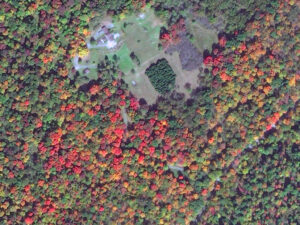 Imagine working with this colorful 50-cm WorldView-2 image with 8 bands? That is twice the spectral information for the same low cost. This 50-cm Maxar WorldView-2 image was collected over Central City, Pennsylvania on October 1, 2012.
Did you know that given recent pricing changes for high-resolution 8-band WorldView-2, WorldView-3 and WorldView Legion satellite imagery, you can order this additional spectral information for the same price as 4-band data?! Yep, you heard that right, so why wouldn’t you uplevel your spectral analysis for no additional cost?!
And additionally, you might not know that most 3-meter PlanetScope images can be delivered with either 4-bands or 8-bands for the same cost as well!
So, when it comes time to get started on a project that includes change detection, land use-land cover classification, vegetation analysis, and/or any other spectral analysis, why not use 8-band WorldView or PlanetScope data for the same cost?!
Send us an email at any time to uplevel your spectral analysis for no additional cost by using 8-band satellite imagery for your geospatial next project.
Have you seen 50-centimeter (cm) 4-band BJ3A in Image Hunter recently?
If not, you need to query the archive now as 50-cm BJ3A is one of the crispest 50-cm satellites on the market! Launched by Singapore-based Twenty First Century Aerospace Technology on June 11, 2021, the BJ3A satellite collects 50-cm resolution panchromatic data and 2-meter (m) resolution multispectral data, including red, green, blue and near-infrared bands. With a swath width of 23.5-kilometers (km), BJ3A can collect an impressive 750,000 sq km a day. You can learn more about BJ3A on our website and search the BJ3A archive on Image Hunter.
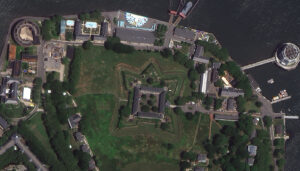
A 50-cm color BJ3A image collected over Governor’s Island in New York City, New York, USA on June 15, 2022.
BJ3A is part of Twenty First Century Aerospace Technology’s satellite constellation which includes 80-cm 4-band TripleSat as well as 30-cm 4-band BJ3N. Now, here are some of 50-cm BJ3A’s key components:
- Spectral Bands:
- Panchromatic
- 4-band multispectral (blue, green, red and near-infrared red [NIR])
- Sensor Resolution:
- At nadir – 50-cm panchromatic & 2-m multispectral
- Spectral Band Wavelength Range: (in nm)
- Panchromatic – 450 to 700
- Blue – 450 to 520
- Green – 520 to 590
- Red – 630 to 690
- NIR – 770 to 890
- Dynamic Range: 12-bits
If you are interested in more details on how 50-cm BJ3A satellite imagery can help your next mapping project, send us an email at sales@apollomapping.com and we will get right back to you!
Have you noticed 50-centimeter (cm) 8-band SuperView Neo-3 in Image Hunter? If you have used our imagery search engine recently, I bet you have seen tons of SuperView Neo-3 (SVN3) data given its massive footprint that is some 130-kilometers (km) wide, as well as an aggressive speculative tasking program by the vendor!
 A 50-cm color SuperView Neo-3 image collected over Washington, DC on December 12, 2024.
A part of the SuperView Neo constellation, Neo-3 differentiates itself from its satellite twins, Neo-1 01/02, with 2-meter (m) 8-band multispectral imagery as well as an industry-leading 130-km wide footprint. SuperView Neo-3 also images at 10° or less off-nadir so there is less tilt in the data, which is crucial in areas with tall buildings, trees, and mountains as well as those with deep, narrow passages. A massive 130-km wide footprint allows Neo-3 to collect an impressive 1.4 million sq km of 50-cm 8-band data daily.
Here are a few of the specifications that set SuperView Neo-3 apart from the competition:
- 50-cm panchromatic and 2-m 8-band multispectral, including blue, green, red and near infrared (NIR) plus coastal blue, yellow, red edge and NIR2.
- All images collected at 10° off-nadir or less.
- 130-km wide image footprint.
- 1.4-million sq km per day collection capacity.
So, if you are looking to uplevel your next spectral analysis, 50-cm 8-band SuperView Neo-3 is sure to be one of your go-to satellites.
You can query 50-cm SuperView Neo-3 on Image Hunter at any time! And if you have additional questions about using SuperView Neo-3 for your next mapping project, you can contact us now at sales@apollomapping.com.
When I was kid, 4th grade I believe, I was eating dinner with my family and watching the news as per our usual routine. I always had to watch the 5:30pm evening news (my folks watched CBS with Dan Rather), and then the first portion of the local news at 6pm before I could leave the table. It’s not like I was paying attention, and my parents must’ve known this, but maybe they thought it would get engrained in my fibers and eventually I would become a devoted citizen, wanting to know all about the world and its goings-on. In some ways, that eventually came to be.
I do actually regularly watch the evening news on ABC (and Fridays on CBS solely so I can see the On the Road segment at the end of the show), but I never caught onto watching the local news. When I lived in Boulder, Colorado, I regularly read the daily university paper, which, at the time, had some affiliation with the citywide paper (the Daily Camera), so a lot of the stories were from there or the AP – and it was free, so it was a no-brainer. Most other cities I’ve lived in, I’ve never read the newspaper otherwise – until I moved to the Mid-Atlantic a decade ago and subscribed for about six years or so until it became all too clear that I didn’t know what I was paying for. The paper kept getting thinner and thinner, there was less and less local news, and the price kept going up. I’m all for supporting local news media, but there comes a breaking point. Maybe you think I’m part of the problem; you’re probably not wrong. But I digress, as usual.
Flash back to when I was kid and being forced to watch the news with my family. I guess I did pay attention sometimes if something caught my ear or eye – or my folks directed me to something that should have. There was a story about a middle school kid whose parents offered him $500 to not watch TV for a year and he did it. He read a lot and got really into the military, so much so that he was planning on enlisting after high school. I wonder if he ever did.
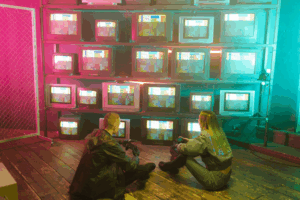 The Idiot Box will control you. (Image retrieved from here and comes courtesy of Yaroslav Shuraev.)
I asked my folks if they’d do the same for me, but $500 was way more than they were willing to pay. Instead, they offered $100, and for whatever reason, I took them up on it. There ended up being some weird loophole I was able to exploit about recorded shows, because they’d only placed the restriction on live programming or regularly scheduled programs (i.e., a show that was always on at such-and-such a time every week). But I didn’t really abuse that because I was lazy. Whenever I went to my friends’ houses and they were watching TV I did cheat, but that’s only because they would’ve told me to leave otherwise. I have no idea if my parents knew that, but probably. Maybe they were just concerned with my ability to stick with the wager in our own house.
Fast-forward a year and I made it. I don’t recall if I read more or not, as I always was a fairly regular reader as a kid, even if none of it was especially challenging or informational, and I know I didn’t develop any other interests or skills, so it was mostly a wasted year, I guess. I remember when my dad came into my bedroom the night of Day 365 to give me a crisp $100 bill for completing the challenge. I’d actually just gotten grounded for some dumb stuff I’d done (I can no longer recall why but I was always doing dumb stuff, getting caught for it, lying about it, and then getting grounded longer because of the compounded crime), but he came in and told me he was proud of me for sticking it out. This wasn’t nothing, as I never stuck anything out. I loved to quit. Occasionally, I still do.
Not really sure why that is beyond laziness, but I guess I don’t see a lot of what’s challenging as worthy of sticking out. There are certainly things I wish I would’ve stayed with when I was younger, as my life would surely be richer today, but ain’t nothing to be done about that now. Of course, there are other things I did stick out when I was young, most notably soccer (I played from K-12) and Boy Scouts (Eagle Scout here!), and I managed to be pretty good at making friends and keeping them. When I was younger, I was very diplomatic, so I could float between the groups pretty easily (e.g., jocks, grits, stoners, band dorks, etc.). Again, I digress…
Did that year off from TV have any effect on me today? Probably not much. I’d say I’ve always had a steady diet of mixed programming from the Idiot Box, but I’ve also tried to limit it as I’ve gotten older. It’s very rare that you’ll find me watching TV before 8pm unless there’s a football or basketball game on I want to watch, and even that I’ve scaled back. There was a time when I watched college football every Saturday from 10am to almost midnight, but no longer. It was nauseating. I remember consistently being disappointed in myself every Sunday for wasting a full day and could have nothing to do with the boob tube for a few days. That is, until the next weekend of games came. But I broke that cycle and I have the 15-year chip to prove it!
I do wish I’d learned a lesson and a skill back in 4th grade with that no-TV challenge. When I think about all the things I wish I’d immersed myself in that would be so much fun to be semi-proficient at now during midlife, much of it could’ve – should’ve – began then. I was an idiot child though, so I can’t fault my younger self because my head just wasn’t screwed on tight. But a more thoughtful and forward-looking kid might’ve seized the moment. But that wasn’t me. What are you gonna do?
I often think about what I could/would give up for a year today (yes, I think I’d still need some sort of incentive or a wager of sorts), and I came up with booze. Not that I don’t like to catch a buzz from time-to-time, only that my drinking has tapered off significantly over the years and it’s now solely motivated by socialization – typically at the behest of my friends, and rarely by me. I’m certainly not a teetotaler by any stretch, but it would be an interesting challenge to take on.
You’re probably wondering: why not just give up TV (and streaming and YouTube videos, etc.) for a year? That would be much harder than booze, especially because of sports. But if you’ve got $100 on it, I may just take you up.
Marco Esquandoles
Side Hustler
¡Bienvenidos a septiembre! Nosotros en Apollo Mapping estamos gustosos de tenerlos otro mes aquí en los resúmenes españoles del mes de septiembre.
Producto Destacado – Imágenes Satelitales Hiperespectrales OHS de 32 bandas y 10 metros
¿Está evaluando la cobertura del uso del suelo en una región extensa?
¿Quizás busca mejorar los resultados de sus clasificaciones automatizadas?
¿O tal vez tiene en mente otra técnica de análisis espectral para su próximo proyecto de mapeo?
Si la respuesta a cualquiera de estas preguntas es “sí”, entonces las imágenes hiperespectrales OHS de 32 bandas y 10 metros son los datos ideales para usted.
 Una imagen OHS de 10 m de Extremadura, España, captada el 15 de julio de 2018. Esta imagen utiliza las bandas 12–8–4 (es decir, rojo–verde–azul) para crear una vista en color natural del paisaje, y ha sido procesada por Apollo Mapping para mejorar la claridad y los colores. (Crédito de la imagen: Orbita)
Orbita Hyperspectral Satellite (OHS) capta imágenes hiperespectrales con una resolución de 10 metros en el rango espectral de 400 nanómetros (nm) a 1,000 nm (desde el azul hasta el infrarrojo cercano). OHS es una de las pocas constelaciones satelitales comerciales que ofrecen imágenes hiperespectrales, lo que distingue a estos microsatélites de sus competidores. La amplia huella de 150 kilómetros de OHS y sus 32 bandas espectrales abren nuevas posibilidades para el mapeo de cambios en el uso del suelo, así como para la ayuda en casos de desastre, el análisis espectral, la evaluación de la salud de las plantas ¡y mucho más!
Orbita continúa ampliando su constelación de microsatélites, acumulando un archivo cada vez mayor de imágenes. Con ocho satélites OHS actualmente en órbita, cada uno capaz de captar hasta 5,000,000 de kilómetros cuadrados por día, el archivo de Orbita no deja de crecer.
A continuación, un resumen rápido de las especificaciones de OHS:
- Resolución: 10 metros
- Ancho de la huella: hasta 150 kilómetros (3 escaneos individuales, cada uno de aproximadamente 50 km de ancho)
- Bandas espectrales: 32 bandas, de 400 nm a 1,000 nm
- Capacidad de captura diaria por satélite: 5,000,000 de kilómetros cuadrados
Para especificaciones más detalladas de OHS y muestras en resolución completa, ¡puede consultar nuestro sitio web aquí! Y puede buscar cobertura de OHS las 24 horas del día utilizando Cazador de Imágenes. Si tiene alguna solicitud de precios, preguntas adicionales, o desea una nueva lista de precios que incluya datos de OHS, ¡envíenos un correo electrónico a sales@apollomapping.com!
PRODUCTO DESTACADO – SuperView Neo-3 de 50 cm y 8 bandas, ¡con una huella masiva!
¿Ha notado SuperView Neo-3 de 50 centímetros (cm) y 8 bandas en Cazador de Imágenes? Si ha utilizado nuestro motor de búsqueda de imágenes recientemente, apuesto a que ha visto una gran cantidad de datos de SuperView Neo-3 (SVN3), dada su enorme huella de aproximadamente 130 kilómetros (km) de ancho, ¡así como un agresivo programa de captura especulativa por parte del proveedor!
Como parte de la constelación SuperView Neo, Neo-3 se distingue de sus satélites gemelos, Neo-101/02, por sus imágenes multiespectrales de 2 metros (m) y 8 bandas, además de contar con una huella líder en la industria de 130 km de ancho. SuperView Neo-3 también capta imágenes con un ángulo fuera de nadir de 10° o menos, lo que significa menos inclinación en los datos, algo crucial en áreas con edificios altos, árboles y montañas, así como en aquellas con pasos profundos y estrechos. Su enorme huella de 130 km de ancho le permite a Neo-3 captar un impresionante total de 1.4 millones de km² de datos de 50 cm y 8 bandas diariamente.
Una imagen a color de SuperView Neo-3 de 50 cm, captada sobre Washington, D.C. el 12 de diciembre de 2024.Aquí presentamos algunas de las especificaciones que distinguen a SuperView Neo-3 de la competencia:
- Pancromático de 50 cm y multiespectral de 2 m con 8 bandas, incluyendo azul, verde, rojo e infrarrojo cercano (NIR), además de azul costero, amarillo, borde rojo (red edge) y NIR2.
- Todas las imágenes captadas con un ángulo fuera de nadir de 10° o menos.
- Huella de imagen de 130 km de ancho.
- Capacidad de captura de 1.4 millones de km² por día.
Así que, si busca llevar su próximo análisis espectral a otro nivel, SuperView Neo-3 de 50 cm y 8 bandas seguramente será uno de sus satélites de referencia.
Puede consultar SuperView Neo-3 de 50 cm en Cazador de Imágenes en cualquier momento. Y si tiene preguntas adicionales sobre el uso de SuperView Neo-3 para su próximo proyecto de mapeo, puede contactarnos ahora mismo en sales@apollomapping.com.
Vista de Pájaro – Casablanca, Marruecos
Cada mes presentamos una nueva imagen satelital con vista de pájaro de un lugar seleccionado alrededor del mundo; y este mes nos dirigimos al hemisferio sur con una vista oblicua de Santiago, Chile.
¿Qué es una imagen satelital con vista de pájaro?
 Este mes presentamos nuestras primeras imágenes satelitales oblicuas con vista de pájaro capturadas por Pléiades Neo 4. Estas imágenes con un alto ángulo fuera del nadir fueron capturadas sobre Casablanca, Marruecos, el 1 de abril de 2026, y cuentan con una resolución nativa de aproximadamente 52 centímetros. ¡Nos encanta el magnífico minarete de la Mezquita Hassan II! (Imágenes satelitales © 2026 Airbus Space & Defense)
¡Es una excelente pregunta y con gusto la respondemos!
Cuando un satélite captura imágenes de la superficie terrestre, siempre existe cierta inclinación de la cámara mientras observa hacia abajo. Esta inclinación se denomina ángulo fuera del nadir (off-nadir) y se mide en grados a partir de 0. Por lo tanto, un ángulo de 0° fuera del nadir significa que el satélite apunta directamente hacia el suelo cuando captura la imagen, mientras que un ángulo de 90° fuera del nadir significa que el satélite apunta hacia un lado y ni siquiera está observando el terreno debajo de él. La gran mayoría de las imágenes satelitales se capturan con un ángulo fuera del nadir inferior a 30°. Sin embargo, en ocasiones poco frecuentes, ya sea por solicitud de un cliente o para capturar un desastre natural u otro acontecimiento importante, un satélite puede inclinarse y capturar imágenes con un ángulo de entre 35° y 50°, lo que consideramos ideal para imágenes con un ángulo fuera del nadir elevado, también conocidas como imágenes con vista de pájaro o imágenes oblicuas. Estas imágenes con vista de pájaro proporcionan una perspectiva única de las imágenes satelitales, ofreciendo una vista amplia del paisaje desde un ángulo lateral. Esperamos que disfrute las imágenes satelitales con vista de pájaro que compartimos en este artículo. Si tiene alguna pregunta sobre este tipo de datos o sobre cualquiera de los productos de imágenes que podemos ofrecerle, envíenos un correo electrónico en cualquier momento a sales@apollomapping.com
.
¿Quiere ver más imágenes satelitales con vista de pájaro de las que aparecen aquí?
Si está interesado en imágenes satelitales adicionales con vista de pájaro de esta ubicación, visite nuestro subgrupo de Reddit, BirdsEyeViewImagery, y únase a la comunidad. Publicamos imágenes satelitales con un alto ángulo fuera del nadir todos los viernes en el subgrupo BirdsEyeViewImagery, la mayoría de las cuales no se publican aquí.
Fernando Gutierrez
Topographic Translator
If you are searching for medium and high-resolution satellite imagery, the search is over as Image Hunter is the solution you’ve been looking for! Featuring satellite and aerial imagery as well as digital elevation models (DEMs) from a constantly expanding list of 70+ constellations/datasets and 19 vendors, our database contains more than 500-million images/records meaning there is just no other website out there with this breadth of commercial data products. Our interface is slim-lined and modern, loading quickly on all platforms, browsers and operating systems. Further, our database is updated multiple times an hour with the most recent images collected by WorldView-3, Pléiades 1, PlanetScope, SuperView Neo and many more so you are sure to get the most current view of all the imagery and DEM databases we work with. Once you submit your request, an Apollo Mapping representative will be in touch within 4 Illinois business hours to get you the pricing information you need for your project.
So why wait? Give Image Hunter a try now to find the imagery and/or DEM data you need for your next mapping project!
Key Improvement(s) From The Past Month
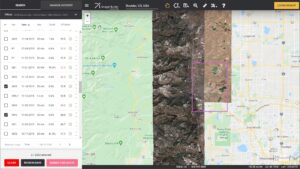
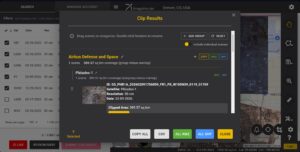 Our new Clip Polygon To Image tool is live! Give it a try to automatically calculate the coverage areas of a complex set of imagery from various data vendors and satellite constellations.
This has been a month’s long effort but we are happy to announce the first steps towards a more automated ordering experience on Image Hunter has been completed, and that is an API for accessing Image Hunter footprints and even low-resolution previews. The system is quite new to us and we are growing with it, but if you are interested in trying out our new search-only API, drop us an email at sales@apollomapping.com and let’s chat about it! We also knocked out a series of bug fixes that will surely make someone happy out there – including supercharged load times for Vantor and Airbus image previews 😊
Here is a summary of the changes/improvements we made to Image Hunter during the past month:
- We have a new search and discovery API that let’s user’s automate queries and check out previews too. Let us know if you are interested in access!
- Supercharged the load times for low-resolution image previews from Airbus and Vantor.
- There was an issue with loading more than 2,000 search results for 3-meter PlanetScope, not anymore.
- Implemented multiple fixes to the Clip Polygon To Image tool including adding persistent links, improved preview handling and a simplified workflow.
- Improved security to block coordinated, low-usage bot attacks.
- The ID search function had a few errors; we found them and solved them.
- Made a few changes to the Submit For Quote and Review/Save modals.
- Sometimes the Signup process for a new Image Hunter account overwrote itself, now it doesn’t.
Data Alert – An Automated Daily Imagery Search
Have you checked out Data Alert which lets you define an area of interest anywhere around the globe, the resolution your project requires and the number of months we should keep the alert active? Once an alert is set up, we check for new data over your area of interest every single day, and send you an email when we find coverage that meets your specifications. We have a short YouTube video with directions to set up a Data Alert, check out the last video; and we have written directions for Data Alert here.
The Sensors Available in Image Hunter
As you might have seen in past articles, we now feature hourly updates (seriously!) of GeoEye-1, KOMPSAT 3/3A, Pléiades 1 and Neo, SPOT 6/7, SuperView-1/2/Neo, WorldView-1/2/3/Legion!
Image Hunter can be accessed 24 hours a day, 7 days a week and is a one-stop shop for every major source of medium and high-resolution satellite (and aerial!) imagery on the market today, including:
- WorldView Legion
- WorldView-4
- WorldView-3
- WorldView-2
- WorldView-1
- QuickBird
- GeoEye-1
- IKONOS
- EROS B
- KOMPSAT-3A
- KOMPSAT-3
- KOMPSAT-2
- Pléiades 1 constellation
- Pléiades Neo constellation
- TerraSAR-X (TerraSAR-X, TanDEM-X and PAZ)
- GEOSAT-1
- GEOSAT-2
- TripleSat
- BJ3A
- BJ3N
- SPOT 1 to 7 constellation
- RapidEye
- GaoFen-2
- GaoFen-1
- ZiYuan-3 01/02 (mono and stereo!)
- FORMOSAT-5
- FORMOSAT-2
- ALOS PRISM (stereo)
- AW3D Standard (DEM)
- SkySat constellation
- PlanetScope constellation (including 5-band SuperDove data)
- SuperView-1 constellation
- SuperView-2
- SuperView Neo-1 01/02/03/04
- SuperView Neo-3 01/02
- Landsat 1-8
- TeLEOS-1
- DS-EO
- Hexagon (HxGN Content Program aerial imagery) imagery + DEM
- WorldDEM
- WorldDEM Neo
- Vricon DEMs
- Orbita Hyperspectral Satellite (OHS)
- KazEOSat-1
- KazEOSat-2
- Jilin-1 Optical
- Jilin-1 Video (including nighttime imagery)
- Jilin-1 GF/DP
- Jillin-1 KF
- Orbita Video Satellites-1/2/3 (OVS-1/2/3)
- BlackSky Global series
Key Features of Image Hunter
If any of our readers have struggled with other geospatial search engines that are clunky, only query one data source and/or do not provide image previews, then Image Hunter is the solution to your woes as it features:
- Online browsing of satellite and aerial imagery from 19 data providers and 56 satellite and aerial imagery derived datasets.
- Near-instantaneous loading of low-resolution preview imagery with collection date, cloud cover and other key metadata.
- The ability to define your area of interest by address, coordinates, geometric shape or shapefile/KMZ.
- A responsive basemap with street names to provide spatial context when discovering data as well as crowd-sourced updates for the most accurate map possible.
- Exports of the area of interest you create as well as the scenes you select in shapefile or KMZ format.
- Support for all operating systems, and not just our friends with Windows machines!
Image Hunter can be accessed here all day and night, we are excited to find out what you think about our imagery search engine! So if you have any ideas and/or feedback to improve Image Hunter, please let us know at sales@apollomapping.com or (303) 993-3863.
In this monthly article, we travel the world to check out unique, fun and sometimes a bit weird 30-centimeter (cm) color imagery samples from the WorldView constellation. In August, we looked at the Rock Restaurant in Zanzibar. For this edition of the 30-cm Color WorldView Image of the Month, we feature an image of Ovnipuerto in Cachi, Argentina.
 If you believe in another realm, spaceships, and earthly creatures, then this particular image will intrigue you. Ovnipuerto in Cachi, Salta, is a unique landmark created by a Swiss citizen, Terry Werner Jaisli, who claimed to be in telepathic communication with extraterrestrials. Built as a landing space for UFOs, it features large, multi-pointed star patterns made of rocks, offering visitors a glimpse into his unusual vision. According to reports, it took Jaisli four years to build his vision, coined the “UFOPORT” by locals. It stretches for approximately four blocks and is formally called Estrella de la Esperanza, or Star of Hope. It consists of 12 stars, drawn on the ground painted with lime and marked with stones. The largest is a white star with 36 points and 48 meters in diameter, it is the lighthouse of the port UFO. Inside, there is another smaller one, of the same color, but with 12 points. In an interview with local media, Werner told the story of how he and a neighbor saw two objects arrive from the mountains with lights on. They settled above the river. The artist said that he raised his arms to call the UFOs and they descended toward him. The objects hovered near the pair, and, according to Werner, directed him to make a sign, a giant star. In the image featured here, the shapes of the sun and stars appear to be magically etched into the ground with bright white and darker shades interplaying throughout. This 30-cm WorldView Legion image was collected on May 21, 2025, and has custom processing and color balance applied by Apollo Mapping. (Satellite Imagery © 2026 Vantor)
Do you enjoy the high-resolution satellite imagery we post monthly in this article and elsewhere in The Geospatial Times? If so, head over to our Reddit subgroup, HighResSatelliteImage, where we post some our favorite high-resolution satellite images on a weekly basis.
30-cm WorldView-3 (WV3) launched in late 2014, WorldView-4 (WV4) launched in late 2016 and then the first WorldView Legion satellites launched in 2024. Taken together, this is the most advanced satellite constellation the commercial marketplace has ever had access to. Here are a few of the features that really set these satellites apart from the competition:
- Improved Resolution
- Higher resolution means you can see more detail in WorldView imagery.
- Data collected at nadir will have 31-centimeter (cm) panchromatic, 1.24-meter (m) visible and near infrared, 3.7-m SWIR (WV3 only) and 30-m CAVIS (WV3 only) bands.
- Additional Spectral Bands
- If spectral analysis is part of your project, then no other satellite can match WorldView-3 and WorldView Legion with their 8 bands of visible and near-infrared data; and then 8 shortwave infrared bands (WV3 only) which are crucial for geological studies.
- Better Positional Accuracy
- With accuracies of 3.5-m CE90% or better (without ground control even!), the 30-cm WorldView constellation has no rivals for its enhanced positional accuracy.
- Daily Revisits
- With multiple WorldView-3 and WorldView Legion satellites orbiting our planet, daily revisits are available for most locations.
- WV4 is no longer collecting new imagery.
- Increased Collection Capacity
- WV3/4 feature 13.1-km swath widths (at nadir) with the ability to collect up to 680,000 square kilometers (sq km) of high-resolution data per day per satellite (though WV4 is dead now).
- WorldView Legion features six 30-cm satellites, significantly boosting the collection capacity of this leading high-resolution constellation.
If you are interested in WorldView-3, WorldView-4 and/or WorldView Legion imagery for your next project, please let us know by phone, 303-993-3863, or by email, sales@apollomapping.com.
You can also find more WV3 samples and technical information on our website here; WV4 samples and information can be found here; and then finally here is more information about WorldView Legion.