
¡Bienvenidos a noviembre! Nosotros en Apollo Mapping estamos gustosos de tenerlos otro mes aquí en los resúmenes españoles del mes de noviembre.
Producto Destacado – La Constelación WorldView Legion de 30 cm y 8 bandas
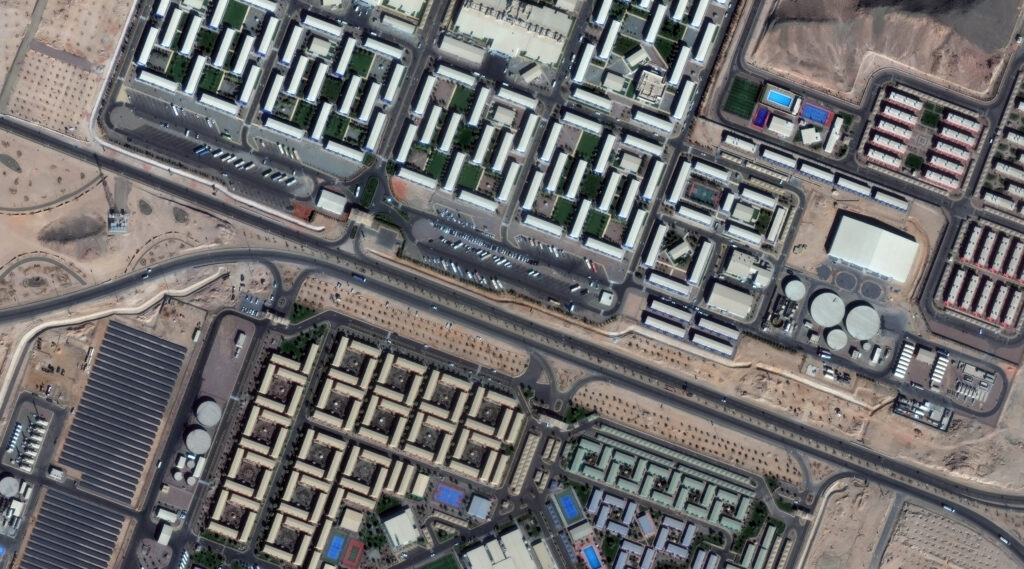
Una imagen WorldView Legion de 30 cm, cortesía de Maxar, captada sobre el Campus NEOM en Arabia Saudita el 2 de diciembre de 2024. Apollo Mapping ha aplicado balance de color personalizado y mejoras a la imagen.
¿Trabaja usted en planificación urbana, monitoreo ambiental o gestión de recursos, y se encarga de identificar el uso del suelo, rastrear cambios en áreas urbanas, evaluar la salud forestal y planificar proyectos de desarrollo? Si es así, las imágenes de alta resolución, con su gran concentración de píxeles para mayor detalle, permiten un análisis y una medición precisos de características no visibles en imágenes de menor resolución, lo que facilita un mapeo exacto, reduce la necesidad de visitas al sitio y permite una documentación detallada de nuestro mundo real.
Desde su lanzamiento en 2024, WorldView Legion de 30 cm y 8 bandas es una de las constelaciones satelitales de 30 cm más prolíficas disponibles en el sector de imágenes satelitales de alta resolución. Con seis satélites actualmente en órbita, la constelación WorldView Legion capta aproximadamente 3.2 millones de kilómetros cuadrados (km²) de imágenes de alta resolución de 30 cm diariamente, las cuales se agregan a Image Hunter de manera (casi) instantánea. Además, su avanzado sensor multiespectral capta datos a través de ocho longitudes de onda diferentes, ofreciendo perspectivas excepcionalmente detalladas de la superficie terrestre, y facilitando la identificación de pequeños objetos y la detección de cambios ambientales sutiles tanto en entornos urbanos como naturales. Aplicaciones avanzadas como la batimetría, la evaluación de vegetación, la exploración mineral y el monitoreo de incendios forestales son casos de uso comunes para las imágenes satelitales WorldView Legion de 30 cm.
Dado que el 90% de la población mundial reside entre los 45° de latitud norte y los 45° de latitud sur, la constelación está optimizada para intervalos de revisita más rápidos en estas regiones, mientras mantiene la cobertura de latitudes más altas con dos satélites de órbita sincrónica con el sol. Cuatro satélites WorldView Legion orbitan el planeta en órbitas persistentes de latitud media. La constelación WorldView Legion opera a través de múltiples trayectorias orbitales con una huella de 10 km en el nadir, lo que permite revisitas frecuentes, de hecho, hasta 15 veces al día en regiones seleccionadas. Esta mayor capacidad y frecuencia de revisita para las áreas más pobladas del mundo crea un archivo robusto y capacidades de monitoreo avanzadas en estas regiones cruciales. La frecuencia de revisita respalda un mapeo integral, una detección de cambios sólida y un análisis a profundidad en extensas áreas geográficas. Estas capacidades permiten que WorldView Legion de 30 cm respalde una amplia gama de aplicaciones geoespaciales, incluyendo proyectos que requieren análisis espectral y un detalle intenso.
Con seis satélites activos en órbita, la constelación WorldView Legion se destaca por:
- Imágenes pancromáticas de 30 cm y multiespectrales de 1.2 m con 8 bandas (azul costero, azul, verde, amarillo, rojo, borde rojo 1, borde rojo 2, NIR).
- Cuenta con cuatro satélites de órbita media (MIO) concentrados en las áreas más pobladas del planeta.
- Capta más de 500,000 km² diariamente desde cada satélite.
- Ofrece un promedio de tres accesos diarios a ubicaciones entre los 40° norte y sur.
- Capta imágenes durante todo el día, no solo en las mañanas, gracias a sus satélites MIO.
La constelación WorldView Legion de 30 cm le permite a Apollo Mapping ofrecer mayor capacidad de imágenes de alta resolución y tiempos de entrega más rápidos a clientes de diversos sectores, incluyendo defensa, minería, petróleo y gas, ingeniería, educación e investigación, y ayuda humanitaria.
Puede explorar todo nuestro archivo de imágenes satelitales hoy en Cazador de Imágenes!
Para ver cómo las imágenes WorldView Legion de 30 cm y 8 bandas pueden apoyar su próximo proyecto, u obtener recomendaciones personalizadas, contacte a nuestro equipo de ventas en sales@apollomapping.com ahora.
Producto Destacado – La Constelación SuperView Neo – Resolución de 25 cm + Un Archivo Masivo
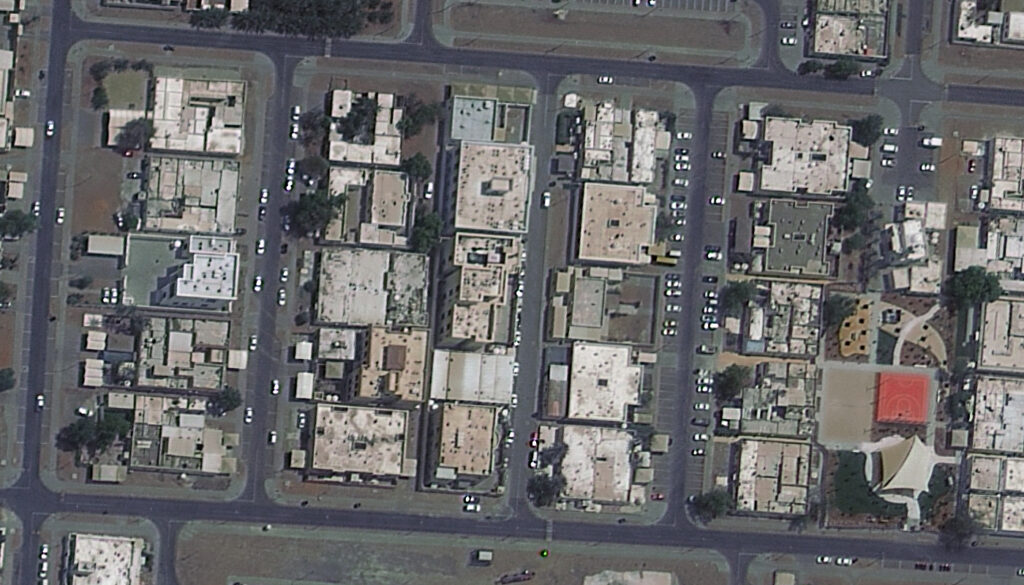
Una muestra a color de SuperView Neo-1 de 25 cm, captada sobre Al Ain, en los Emiratos Árabes Unidos, el 3 de agosto de 2025.
¿Ha escuchado hablar de la constelación SuperView Neo? Si no, ¡es momento de conocerla mejor! Primero está SuperView Neo-3 01/02, de 50 centímetros (cm) y 8 bandas, satélites gemelos, ambos con huellas de imagen masivas. Luego está SuperView Neo-1 03/04, dos satélites que presentan nuestras primeras imágenes de 25 cm y 4 bandas, con bandas azul, verde, roja e infrarroja cercana (NIR). Completando la constelación están SuperView Neo-1 01/02, ambos con resolución de 30 cm e imágenes de 4 bandas. Entre los seis satélites activos de SuperView Neo, la constelación acumula unos 5.8 millones de kilómetros cuadrados de imágenes de alta resolución cada día, ¡increíble!
Si desea obtener más información sobre la constelación SuperView Neo, consulte nuestra página web dedicada aquí.
Y si desea consultar imágenes satelitales de SuperView Neo-1 y SuperView Neo-3 en cualquier momento, puede hacerlo en Cazador de Imágenes ahora.
También puede enviarnos un correo electrónico con preguntas o solicitudes específicas de precios para la constelación SuperView Neo a sales@apollomapping.com.
Vista de Pájaro – Mumbai, India
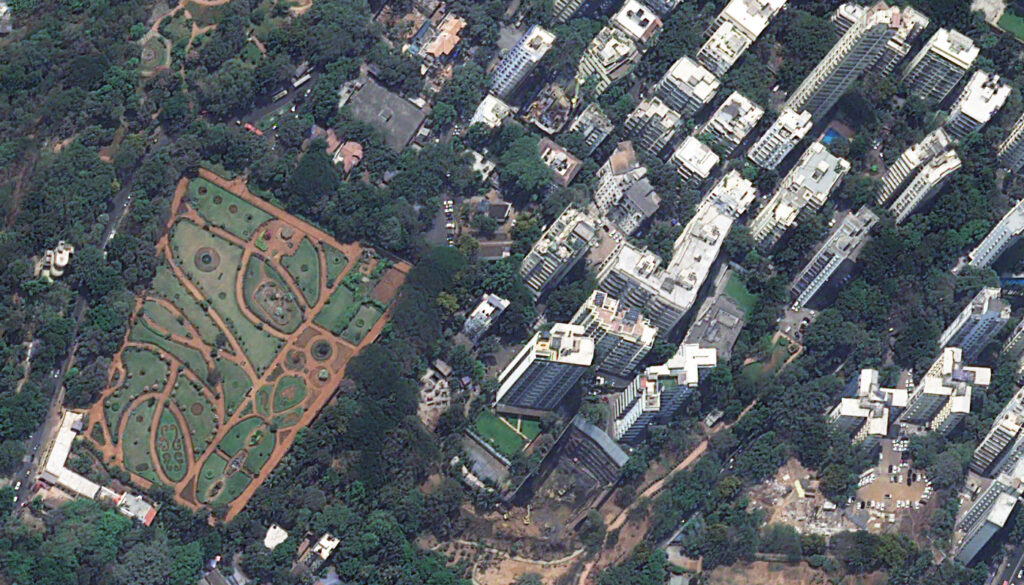
Este mes presentamos una imagen satelital en vista de pájaro de Pléiades Neo 4, captada sobre Mumbai, India, el 26 de abril de 2025. Estas imágenes oblicuas tienen una resolución nativa de aproximadamente 45 centímetros. Si desea ver más imágenes de alto ángulo fuera de nadir captadas sobre Mumbai, visite nuestro BirdsEyeViewImagery grupo de subreddit, donde publicamos más imágenes oblicuas como esta semanalmente. (Imágenes Satelitales © 2026 Airbus)
En este artículo mensual, presentamos una nueva imagen satelital en vista de pájaro de un lugar seleccionado alrededor del mundo; y para este mes, viajamos hacia el este desde África con una parada en una de las ciudades más históricas de India, Mumbai.
¿Qué es la imagen satelital en vista de pájaro?
Bueno, esa es una buena pregunta que nos complace responder. Cuando un satélite capta imágenes del suelo debajo de él, siempre existe cierta inclinación en la cámara mientras observa hacia abajo. Esta inclinación se llama fuera de nadir (off-nadir) y se mide en grados a partir de 0°; por lo tanto, 0° fuera de nadir significa que el satélite apunta directamente hacia el suelo al captar la imagen, mientras que 90° fuera de nadir significaría que el satélite apunta hacia un lado y ni siquiera está enfocando el suelo debajo de él al momento de la captura. La gran mayoría de las imágenes satelitales se recopilan con un ángulo fuera de nadir inferior a 30°. Sin embargo, en raras ocasiones, ya sea por solicitud de un cliente o para capturar un desastre natural u otro evento importante, un satélite puede inclinarse y captar imágenes en un rango de 35° a 50°, lo cual consideramos ideal para imágenes de alto ángulo fuera de nadir, también llamadas imágenes en vista de pájaro o imágenes oblicuas. Estas imágenes en vista de pájaro ofrecen una perspectiva única a las imágenes satelitales, brindando una vista amplia del paisaje desde un costado. Esperamos que disfrute de las imágenes satelitales en vista de pájaro que compartimos en este artículo. Y si tiene alguna pregunta sobre este tipo de datos o sobre cualquiera de los productos de imágenes con los que podamos ayudarle, envíenos un correo electrónico en cualquier momento a sales@apollomapping.com!
Si está interesado en más imágenes satelitales en vista de pájaro de esta ubicación, visite nuestro subgrupo de Reddit, BirdsEyeViewImagery, y hágase miembro. Publicamos imágenes satelitales de alto ángulo fuera de nadir todos los viernes en el subgrupo BirdsEyeViewImagery, la mayoría de las cuales no se publican aquí.
Fernando Gutierrez
Topographic Translator
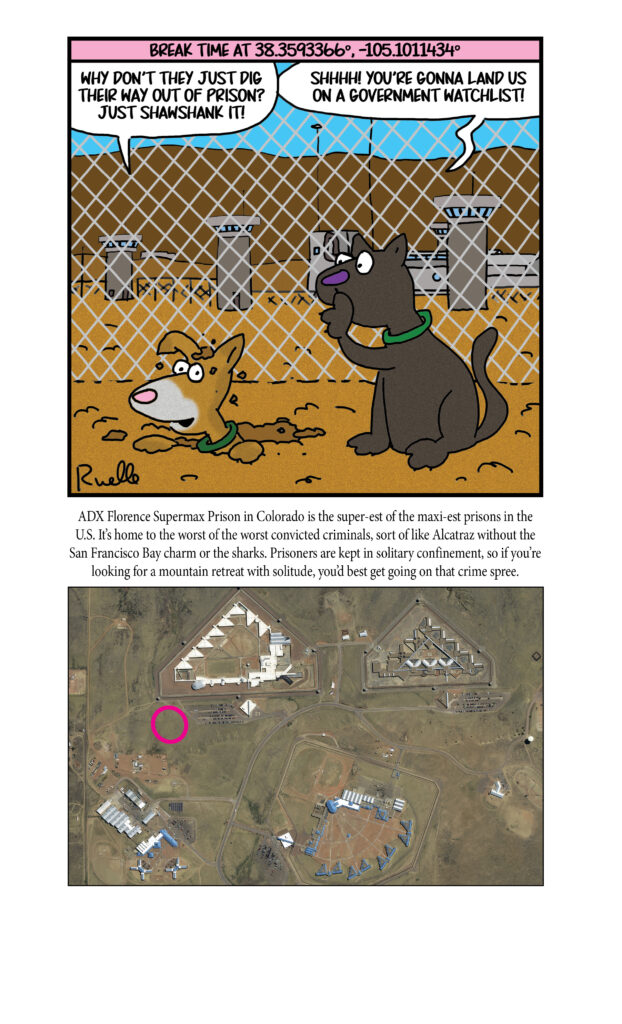
Cricket’s Chirp is created for Apollo Mapping by Ron Ruelle, a Northwest Ohio (formerly Boulder, CO) based cartoonist, lllustrator and teacher. No animals are harmed in the creation of these comics, but Ron sometimes breaks a pencil in frustration. He has a new collection of his weekly Skelton Comics available at www.ronruelle.com
(Image Courtesy: Airbus. Processed by Apollo Mapping for improved grey-scale accuracy and clarity.)
We love maps.
We love imagery.
We love work breaks.
We hope you like them as well!
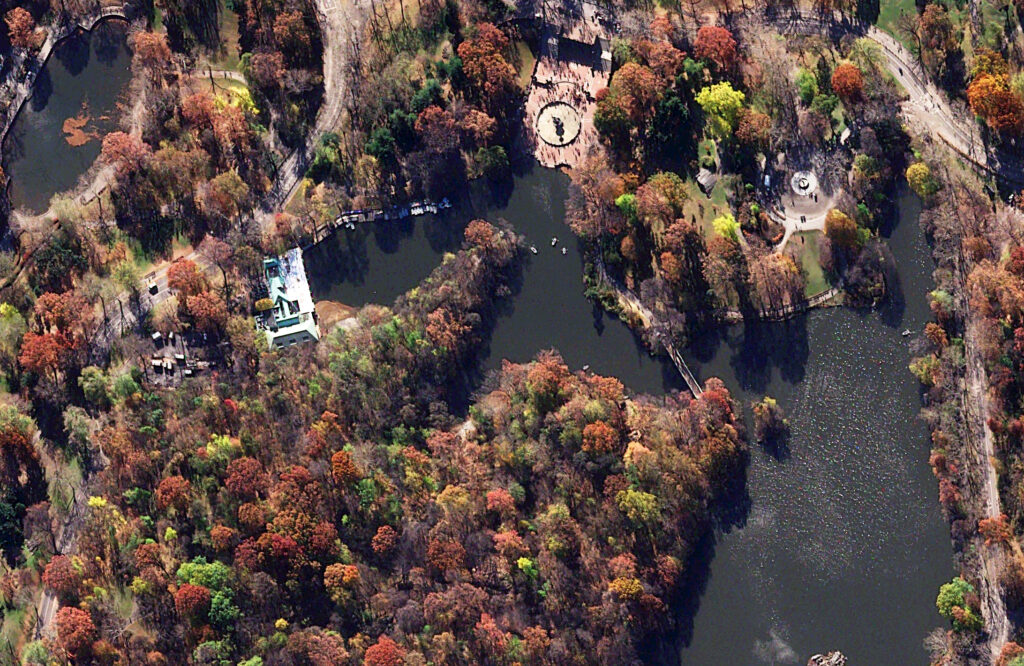
While mom’s in the kitchen basting the turkey for Thanksgiving, kids pile on the couch and tune in to the televised annual Macy’s Thanksgiving Day Parade held in New York City. On this holiday in 2023, Central Park bordered the first leg of the 97th annual Macy’s Thanksgiving Day Parade. Under sunny autumn skies, the procession kicked off at 8:30AM from West 77th Street and glided down Central Park West alongside the park, turned at Columbus Circle then headed down Central Park South.
Spectators packed the west side of Central Park West between 75th and 61st streets to view the start of this Thanksgiving tradition. New that year to the parade were Beagle Scout Snoopy, Monkey D. Luffy and Kung Fu Panda’s Po.
For this month’s Imagery Work Break, we have a 30-cm color Pléiades Neo 3 image taken midday the morning of November 23, 2023 which was Thanksgiving Day in 2023. In the image, we can the beautiful fall foliage dotting Central Park in New York City. The richly hued colors of fall burst out of the frame and boats can be seen floating down below and docked along the shore. People are milling about, presumably enjoying the sunny day after the Macy’s Thanksgiving Day Parade wrapped up.
Have a great rest of your workday! 😊

I’ve written about dating apps before. I hate them, and I hate that I’m back on them. But these days, it’s the most common route to meeting women, so I stoop to it. I hate social media. I had Facebook and Myspace for a period of three months in late 2005 and early 2006, before the former went public (you still had to have a university email to access it, and I worked for one at the time). Dating apps are the worst type of social media, as it’s just shopping for love – or more commonly, lust.
I’m not especially photogenic to begin with, but I also have curious hair and a somewhat menacing beard, so that puts me at a competitive disadvantage from the start. As my mom has pointed out, I might have more luck with a haircut and a fresh shave, but I stopped taking advice from my parents decades ago, even when it’s wise. So, I work with a shrunken pool of options. I cast my net wide, covering roughly 60 miles from my adopted hometown. I throw out corny, and sometimes funny, pitches to dozens upon dozens of women. Since getting back on a dating app about a month ago, it may be closer to 100 messages. Hell, maybe more. My hit rate is low – statistically insignificant.
But if you throw enough out there, a few are bound to be curious. I engage with those who reply, but many of those eventually run their course. Sometimes it’s hard to get a conversation going, especially if there are seemingly few things in common or the “vibe” never comes into being. Some I wonder why I messaged in the first place and they just fade away. Some get to a good flow, though, eventually. But even then, those don’t always make it to the real world – i.e., actually meeting up.
Recently, I had two first dates scheduled on back-to-back nights. The first messaged me the day of and said she needed to cancel. She wasn’t “feeling up to it.” I never heard back from her, but for whatever reason, she didn’t unmatch us yet, which is weird. Her profile continues to exist in my portal, and I look at it as some untouchable oddity. The next gal simply unmatched before the already established date. I’m glad she did so before I bothered to get ready and go meet her. Would’ve been nice to know why it went that route. You don’t get a lot of good feedback on these things.
I had another woman message me, one I’d previously passed on, but whatever, I was game to see where it would go. It strangely got nudged into the land of ‘role play’ by her doing and I went along with it. She started sending me pictures (you can guess the type) before too long and I figured I might as well see it through. After only a few days of interactions through the app and then via text, and without having met up in person, she alluded to the possibility that she could fall in love with me. Weird. Really weird. That was the end of the line for that one…
Another gal I’ve gone out with twice, but there was a full two weeks in between because of our conflicting schedules and distance – she’s about 65 miles away, which will inevitably be a dealbreaker, I imagine. Who wants to drive that far roundtrip to see someone all the time?
Anyway, both times we’ve hung out we’ve had a really good time. But the communication in between has been terrible. I put this mostly on her – it’s kind of like pulling teeth to get her to engage meaningfully and in an extended fashion via text. I get it to a degree – who wants to do that before you’re actually involved, but I don’t know how else you’re supposed to move in that direction if you’re not otherwise seeing one another more frequently. Maybe that’s the point; she’s not interested in seeing me more regularly. If so, let’s cut the cord now.
However, we’re supposed to meet up this Monday. And this will be her last chance – if we just stay drifting in this liminal zone of occasionally hanging out and not moving towards something physical (let alone a relationship), then I need to get out. Cut my losses. Not even sure why I’m giving this one more chance. Maybe I’m closer to desperation than I’d like to admit.
I’m scanning through those who I’ve match with as I write, the ones who I haven’t made it to a date with yet but still have some steady communication happening. None of them are looking like winners. Which makes me feel like a loser.
I’ve tried to just go out and meet women IRL, and that’s been a failure so far. Turns out I lost whatever game I may have had in the past; I’m terrible with the cold approach. Make an introduction, and I can charm the pants off someone (that is, after all, my intent). But I don’t have a lot of capable wingmen these days; most are liabilities. So, instead I struggle through this process I’d thought I’d left behind for good, waiting to see if I can ever get off this merry-go-around – it’s making me sick.
Marco Esquandoles
Stuck in the Dating Loop

Created in Canva by BD.
I grew up watching television’s super women: Wonder Woman, the Bionic Woman, and Charlie’s Angels. With their example and my parents’ encouragement, I felt ready to conquer the world – even in the Deep South. As women grow older, bravery becomes more strategic. I was fascinated to learn that some ancient cultures recognized that young women needed the same strength and training as young men. No sewing or cooking classes for those girls!
The young princesses in Egypt were trained to be strong women. According to Science Daily, “Researchers studying royal mummies from Dahshur found bone changes consistent with years of archery and other strenuous weapon use. Several women also showed evidence of healed injuries, suggesting surprisingly active lifestyles that may have included hunting or military training.” While the assumption for many years had been that the weapons buried with these women were ornamental or ceremonial, more recent research shows quite the opposite. That dagger was probably on her hip and used regularly. The remains analysis of six princesses of the pharaoh Amenemhat II show muscle development, scars, and broken bones. Most interesting to me is that the research focus is on who these people were and the life they led, not just the treasures in their tombs.
More ancient cultures trained female warriors through strict physical conditioning, martial arts, and weapon handling tailored to their society’s survival needs or military structure. Spartan girls were educated and trained beginning at age 7 until marriage. Compared with women in other Greek city-states during the Classical Period, Spartan women had greater rights and autonomy. They could inherit property, own land, conduct business, and generally received more education than women elsewhere in ancient Greece. Aristotle was bothered by their strength and criticized their independence and influence. He preferred the traditions of Athens where women were second class citizens.
Eurasian Steppe Nomads trained their girls and young women in horseback riding, archery, and close quarters defense. Groups like the Sarmatians and Scythians lived a mobile equestrian lifestyle and needed to be ready for the rigors of that life. Like the princesses in Egypt, they were buried with weapons, battle injuries and military kits.
Women from samurai families were trained to protect estates, castles and families while the men were away on campaigns. Onna-bugeisha – the female martial warriors of feudal Japan’s noble bushi class—received rigorous physical, mental, and tactical training from an early age to defend their homes, families, and domains. They were also trained in specialized weaponry.
In other ancient and classical societies (such as Celtic, Germanic, or ancient Chinese communities), women trained or fought primarily during desperate sieges or neighborhood defense when settlements faced destruction or enslavement. The use of ranged weapons like the crossbow or bow allowed women to participate effectively in militia and fortress defense.
There are six societies where women are in charge. The Mosuo People in China are “officially classified by the Chinese government as part of another ethnic minority known as the Naxi, but the two are distinct in both culture and language.” Indonesia’s Minangkabau People “hold a high status in Minangkabau culture and are often the ones who make decisions regarding family and community affairs.” Ghana’s Akan People trace their lineage by their female ancestry. In Costa Rica’s Bribri People a child belongs to the mother’s clan. Women are trusted with land ownership and preparation of the sacred cacao. India’s Garo People also are matrilineal. Papua New Guinea’s Nagovisi women take pride in their land and participate in leadership and ceremonies. It is no Wonder Woman’s Paradise Island, but it is real life.
The Story Exchange has collected stories of women that are sure to inform and inspire. Learn about a groundbreaking photojournalist who grabbed her camera and headed to the riskiest places. Explore North American Indigenous female chiefs. Read about women journalists that went undercover and bravely challenged fascism or reported lynchings in the South. Learn about the woman that was told she was “too strong” and championed Title IX.
I am thankful to these courageous trailblazing women. I appreciate that my dad was ahead of his time when he insisted that I know how to: fix my car, throw a punch, install a faucet, build stuff, mend a fence, drive a tractor, mow the lawn, and fix the clogged carburetor on the mower. He said, “I don’t want you to have to be waiting around for some man to just fix something or take care of you.” While these were all practical skills for life, my dad was building confidence just like those ancient fathers. Let’s continue that tradition and empower all of our young people to be problem-solving champions for good in the world!
If you need me, I’m working on a new project or helping young people develop skills and courage to get the job done.
Barbaree Duke
Geospatial Crusader
- As per usual, we have a nice list of insanely cool technological advancements announced over the past month. So sit back and enjoy:
Artificial sweeteners can actually alter genes in mice, what about in humans?
A new way to convert mixed plastics to hydrogen fuel.
The intersection of climate change, the decline of pollinators and plant genetic resilience.
A new way to map tides using satellite imagery and elevation models.
This tiny structure outperforms more expensive metallic catalysts for methane production.
Modeling suggests our Moon could have formed in hours.
A new way to display brilliant white colors.
Engineered yeast can turn waste plastics into 3D printed cookies.
Plasma-powered cement production cuts out greenhouse gases.
There is a connection between the smell of chocolate and improved workouts.
New solar-powered desalination technique creates fresh water and reusable salts and minerals.
This stronger concrete uses some sustainable inputs and even absorbs carbon dioxide.
A new way to convert CO2 gas into usable products.
These ancient proteins pack a large punch against microbes.
- The Global Climate Change Report for September 2026 has been released by NOAA’s National Centers for Environmental Information and reveals further proof that global climate change remains a concern. In September 2026, the global surface temperature 1.33°C (2.39°F) above the 20th Century average, ranking as the second warmest September since global records began in 1850. This value falls behind 2023 by 0.07°C (0.13°F). September 2026 marked the 51st =consecutive September with global temperatures above the 20th Century average. Notably, the past four Septembers (2023–2026) represent the four warmest Septembers on record and are the only Septembers to exceed a +1.0°C (+1.8°F) departure. All 10 of the warmest Septembers have occurred since 2015. For the fourth consecutive month, the global ocean surface temperature departure set a new record high, averaging 1.10°C (1.98°F) above average for September. This surpassed the previous September record set in 2023 by 0.08°C (0.14°F) and marked only the second time a September ocean-departure has exceeded +1.0°C (+1.8°F). This value represents the highest ocean temperature departure for any month on record, edging out the previous all-time record set in August 2026 by +0.02°C (+0.04°F). The unprecedented heat was driven by record heat in an extensive swath of the central and eastern tropical Pacific Ocean (consistent with ongoing El Niño conditions), as well as record-high ocean surface temperatures across portions of the Atlantic, Indian, Southern and Pacific oceans.
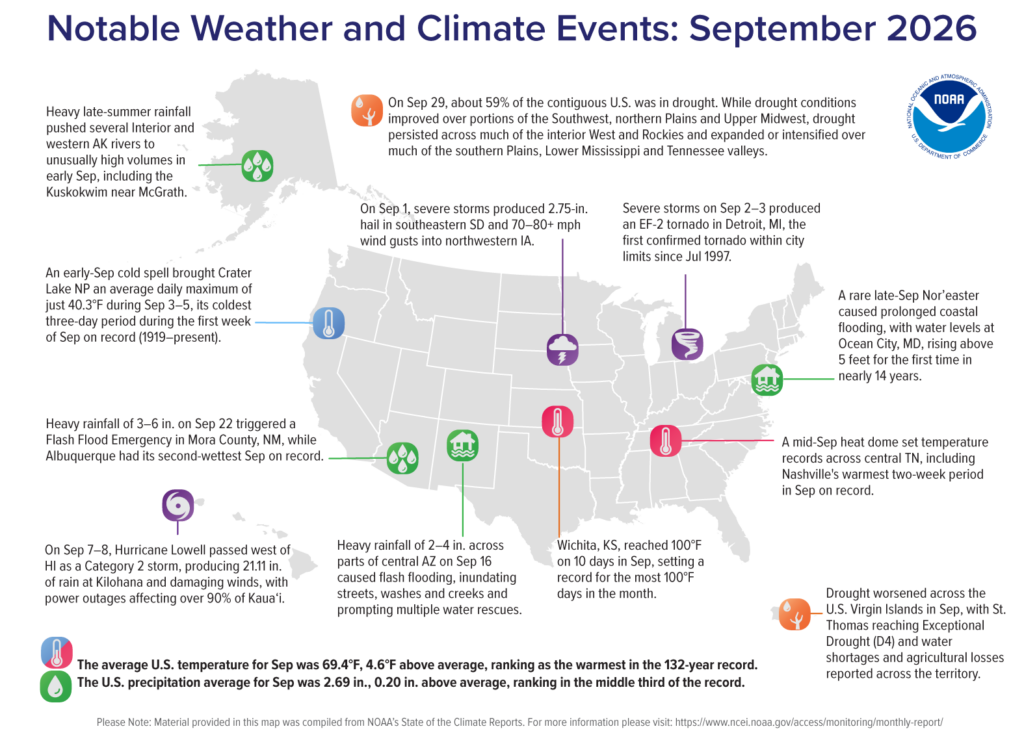
The Arctic experienced its 13th lowest sea ice extent in September 2026 and its warmest September on record, while the Antarctic saw the third lowest sea ice extent. September 2026 was North America’s warmest September on record, which also happened in Asia. Global tropical cyclone activity was above average with 19 named storms in September. Typhoon Saudel made landfall three times across southeastern China, causing excessive rain and triggered widespread flooding that damaged homes and buildings. Typhoon Dujuan dumped record-breaking rainfall across parts of eastern Japan, which led to flooding and landslides. Hurricane Polo became the second most intense hurricane on record in the eastern North Pacific basin by pressure, ranking behind only Hurricane Patricia in 2015. (Image Credit: NOAA Global Climate Report)
- We can celebrate more than just Thanksgiving in November. In fact, GIS Day falls on November 18 – an annual celebration of geographic information systems. November is brimming with community events: Turkey Trots, holiday parades, tree-lighting ceremonies, seasonal markets, concerts and winter festivals. Behind many of those events is GIS, working to map out the best running route for a Turkey Trot, and what streets should be closed and what roads should a parade route follow. Or where should temporary parking be located for seasonal markets and tree-lighting ceremonies? Here’s an example of the town of Olivette using GIS to map out a Turkey Trot. Not surprising, the highly anticipated Macy’s Thanksgiving Day Parade covers a 2.5-mile route in Manhattan, and so New York City uses GIS and task forces for spatial mapping, crowd management, and real-time wind speed safety tracking. In fact, GIS is used for all New York City’s major special events, such as the New Year’s Eve Times Square celebration, St. Patrick’s Day parade, 4th of July fireworks event, and Macy’s Thanksgiving Day parade; each requires months of planning. The Fire Department of New York GIS Unit uses ArcGIS to bring together various datasets to create a single map for the department’s special event deployment and aid in interagency coordination. GIS helps build preplan maps that incident commanders then utilize to plan where to place personnel and equipment to maintain situational awareness during the actual event. The web map application allows the operations center to view maps of the current special event deployment in real-time. The New Year’s Eve celebration draws one million attendees, and FDNY provides 15 EMS units and four hazmat teams for the event. The last event was relatively calm: only 150 people were treated for injuries. GIS helped view where fire and medical branch teams were located so that, should a major incident occur, the city would be ready.
Brock Adam McCarty
Map Wizard
(720) 470-7988
brock@apollomapping.com
A 25-cm color SuperView Neo-1 sample collected over Al Ain in the United Arab Emirates on August 3, 2025.
Have you heard of the SuperView Neo constellation? If not, it is time to get to know it better! First up is 50-centimeter (cm) 8-band SuperView Neo-3 01/02, twin satellites both with massive imagery footprints. And then there is SuperView Neo-1 03/04, two satellites which feature our first 25-cm 4-band imagery with blue, green, red and near-infrared (NIR) bands. Rounding out the constellation are SuperView Neo-1 01/02, both with 30-cm resolution and 4-band imagery. Between all six active SuperView Neo satellites, the constellation amasses some 5.8 million square kilometers of high-resolution imagery each and every day, wow!
If you would like to find out more about the SuperView Neo constellation, check out our dedicated website page here.
And if you would like to query SuperView Neo-1 and SuperView Neo-3 satellite imagery at any-time, you can do that on Image Hunter now.
You can also email us with questions or specific pricing requests for the SuperView Neo constellation at sales@apollomapping.com.
In October, we traveled far north to Igloo City in Alaska. And this month for the Pléiades 1 – Pléiades Neo Point of Interest, we stay in the States and explore Bisti/De-Na-Zin Wilderness in New Mexico.
Do you enjoy the high-resolution satellite imagery we post monthly in this article and elsewhere in The Geospatial Times? If so, head over to our Reddit subgroup, HighResSatelliteImage, where we post some our favorite high-resolution satellite images on a weekly basis.
About the Point of Interest: The Bisti/De-Na-Zin Wilderness in northwestern New Mexico features eroded badlands, colorful hoodoos and fossil-bearing formations dating back to the late Cretaceous period. This 45,000-acre wilderness protects unique geological features and paleontological resources, including petrified wood and vertebrate fossils, that once called New Mexico home.
Dinosaur fossils have been found across these badlands, along with the remains of prehistoric forests, plants and animal life that created large coal deposits and an oil field. The wilderness also sits inside a region that used to be a river delta feeding into a shallow inland sea some 70 million years ago called the Western Interior Seaway. There have been fossils discovered of freshwater life that prevailed in the ancient river. When the sea and river dried up, it left a 1,400-foot layer of sandstone, mudstone, shale and coal. Then 6,000 years ago, the ice from the last ice age melted and the resulting floods eroded the sandstone, exposing fossils, petrified wood, and limestone tubes. Time, wind, and water continued the erosion, leaving behind layers of stone that have become the hoodoos and towers seen today.
Fun Factoids: (1) Hikers enjoy traveling the unmarked routes spanning clay hills and sandstone outcrops. (2) There are trails available to equestrians, too. (3) Bisti offers a shaded group picnic area with an information kiosk. (4) There are also primitive camping areas. (5) The Bisti/De-Na-Zin Wilderness encompasses 41,170 acres of rock formations. The U.S. Congress designed the Bisti/De-Na-Zin as a wilderness area in 1984. (6) Translated from the Navajo word Bistahi, Bisti means “among the adobe formations.” De-Na-Zin translates from Standing Crane, which is a reference to crane petroglyphs found south of the Wilderness.
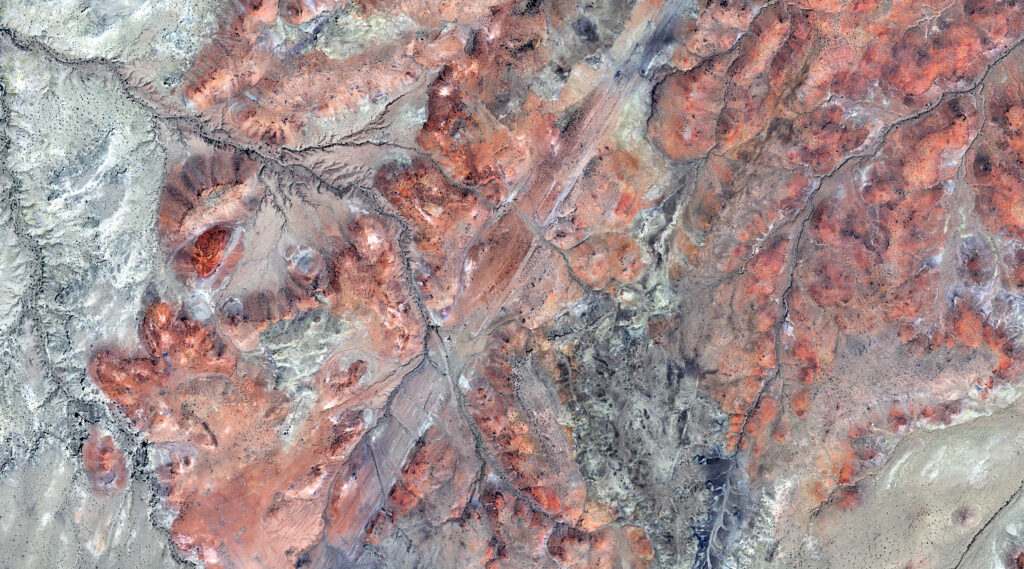
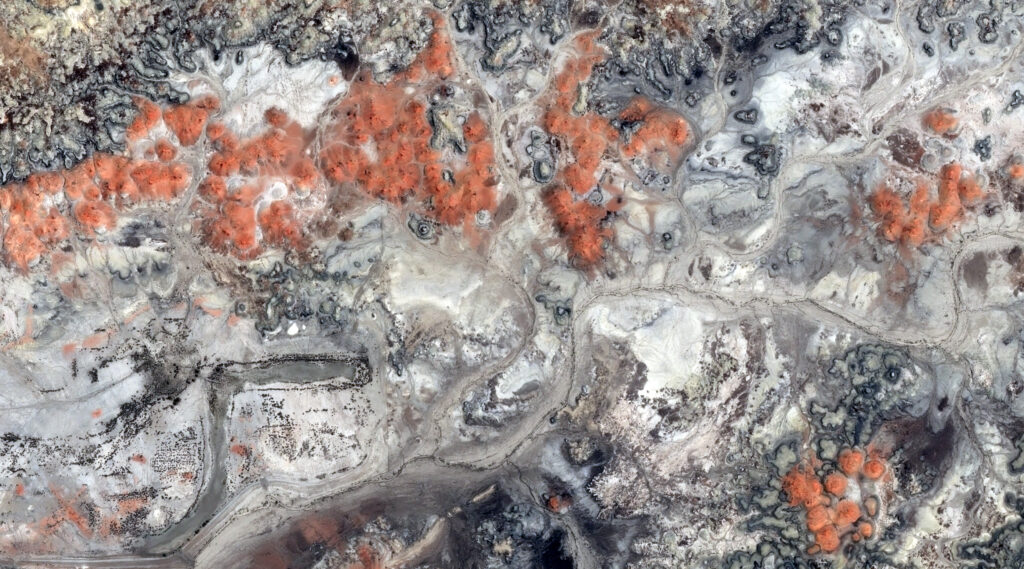
These two satellite images show an overhead view of Bisti/De-Na-Zin Wilderness. Colorful shapes carved out by weather and time can be seen in the Pléiades Neo 4 30-cm color-enhanced image taken May 27, 2024. Another stunning view of the rugged yet beautiful terrain can be seen in the Pléiades 1B 50-cm color-enhanced image taken June 16, 2022. PLEIADES © CNES 2026, Distribution Airbus DS.
The 50-cm Pléiades 1 High-Resolution Satellite Constellation
The Pléiades 1 constellation (or at least part of it!) has been in orbit since December 2011 and if you have not had a chance to check out any sample imagery, take a few moments and have a look at the gallery on our website. If you work with high-resolution imagery, you should consider Pléiades 1 and Pléiades Neo for your next geospatial projects.
A variety of Pléiades 1 products are available from both a well-established archive and as a new collection, including 50-centimeter (cm) pansharpened imagery and 50-cm panchromatic – 2-meter (m) 4-band multispectral bundles. We are happy to discuss the technical specifications, pricing and tasking options available with both of these satellite constellations.
The 30-cm Pléiades Neo High-Resolution Satellite Constellation
Pléiades Neo is our newest high-resolution satellite constellation. The first Neo satellite went up in April 2021 and the second in August of the same year. This 30-centimeter resolution constellation will add two more satellites in the next few months and upgrade from daily to intraday revisits. Pléiades Neo has six multispectral bands with 1.2-meter resolution, including a deep blue and two infrared bands, along with a 30-centimeter resolution panchromatic band.
The archive is growing every day, and the satellites are available for new collections, making Pléiades Neo the perfect solution for site monitoring. Check out our beautiful sample images in the Pléiades Neo gallery.
More sample images and technical information about Pléiades 1 can be found on our website here; while the same can be found here for the Pléiades Neo constellation.
The Apollo Mapping sales team can answer any questions you might have about Pléiades 1 and/or Pléiades Neo. We can be reached at (303) 993-3863 or sales@apollomapping.com.