Remotely Spatial: Bravery Begins at Home
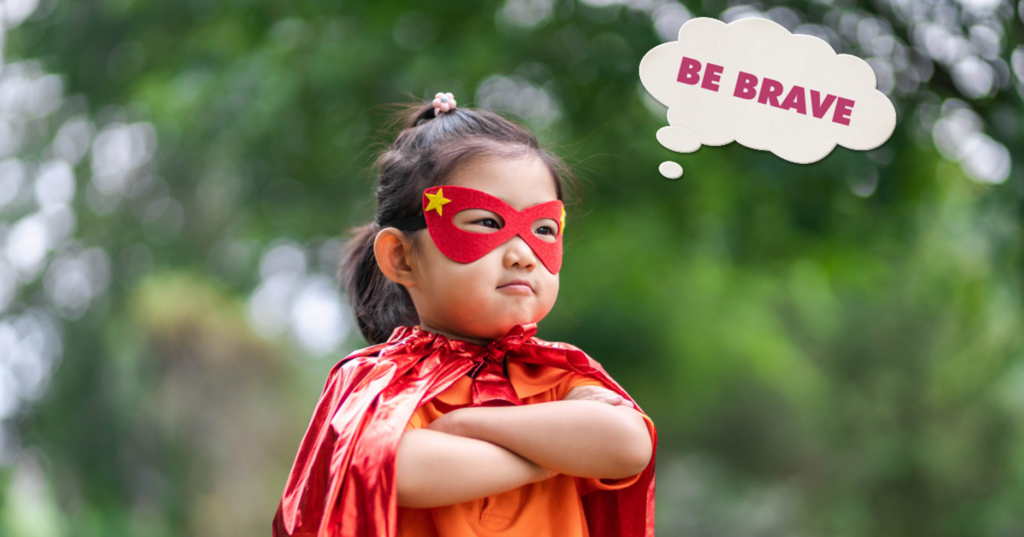
Created in Canva by BD.
I grew up watching television’s super women: Wonder Woman, the Bionic Woman, and Charlie’s Angels. With their example and my parents’ encouragement, I felt ready to conquer the world – even in the Deep South. As women grow older, bravery becomes more strategic. I was fascinated to learn that some ancient cultures recognized that young women needed the same strength and training as young men. No sewing or cooking classes for those girls!
The young princesses in Egypt were trained to be strong women. According to Science Daily, “Researchers studying royal mummies from Dahshur found bone changes consistent with years of archery and other strenuous weapon use. Several women also showed evidence of healed injuries, suggesting surprisingly active lifestyles that may have included hunting or military training.” While the assumption for many years had been that the weapons buried with these women were ornamental or ceremonial, more recent research shows quite the opposite. That dagger was probably on her hip and used regularly. The remains analysis of six princesses of the pharaoh Amenemhat II show muscle development, scars, and broken bones. Most interesting to me is that the research focus is on who these people were and the life they led, not just the treasures in their tombs.
More ancient cultures trained female warriors through strict physical conditioning, martial arts, and weapon handling tailored to their society’s survival needs or military structure. Spartan girls were educated and trained beginning at age 7 until marriage. Compared with women in other Greek city-states during the Classical Period, Spartan women had greater rights and autonomy. They could inherit property, own land, conduct business, and generally received more education than women elsewhere in ancient Greece. Aristotle was bothered by their strength and criticized their independence and influence. He preferred the traditions of Athens where women were second class citizens.
Eurasian Steppe Nomads trained their girls and young women in horseback riding, archery, and close quarters defense. Groups like the Sarmatians and Scythians lived a mobile equestrian lifestyle and needed to be ready for the rigors of that life. Like the princesses in Egypt, they were buried with weapons, battle injuries and military kits.
Women from samurai families were trained to protect estates, castles and families while the men were away on campaigns. Onna-bugeisha – the female martial warriors of feudal Japan’s noble bushi class—received rigorous physical, mental, and tactical training from an early age to defend their homes, families, and domains. They were also trained in specialized weaponry.
In other ancient and classical societies (such as Celtic, Germanic, or ancient Chinese communities), women trained or fought primarily during desperate sieges or neighborhood defense when settlements faced destruction or enslavement. The use of ranged weapons like the crossbow or bow allowed women to participate effectively in militia and fortress defense.
There are six societies where women are in charge. The Mosuo People in China are “officially classified by the Chinese government as part of another ethnic minority known as the Naxi, but the two are distinct in both culture and language.” Indonesia’s Minangkabau People “hold a high status in Minangkabau culture and are often the ones who make decisions regarding family and community affairs.” Ghana’s Akan People trace their lineage by their female ancestry. In Costa Rica’s Bribri People a child belongs to the mother’s clan. Women are trusted with land ownership and preparation of the sacred cacao. India’s Garo People also are matrilineal. Papua New Guinea’s Nagovisi women take pride in their land and participate in leadership and ceremonies. It is no Wonder Woman’s Paradise Island, but it is real life.
The Story Exchange has collected stories of women that are sure to inform and inspire. Learn about a groundbreaking photojournalist who grabbed her camera and headed to the riskiest places. Explore North American Indigenous female chiefs. Read about women journalists that went undercover and bravely challenged fascism or reported lynchings in the South. Learn about the woman that was told she was “too strong” and championed Title IX.
I am thankful to these courageous trailblazing women. I appreciate that my dad was ahead of his time when he insisted that I know how to: fix my car, throw a punch, install a faucet, build stuff, mend a fence, drive a tractor, mow the lawn, and fix the clogged carburetor on the mower. He said, “I don’t want you to have to be waiting around for some man to just fix something or take care of you.” While these were all practical skills for life, my dad was building confidence just like those ancient fathers. Let’s continue that tradition and empower all of our young people to be problem-solving champions for good in the world!
If you need me, I’m working on a new project or helping young people develop skills and courage to get the job done.
Barbaree Duke
Geospatial Crusader