GeoEye-1
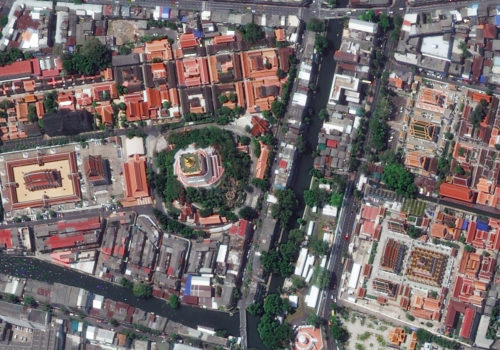
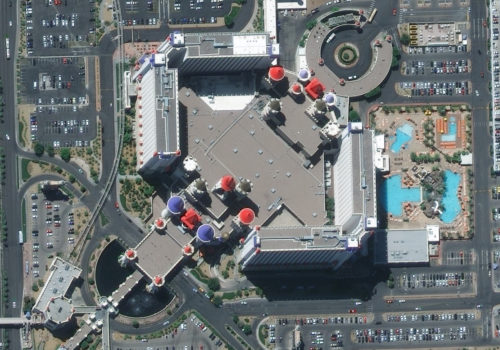
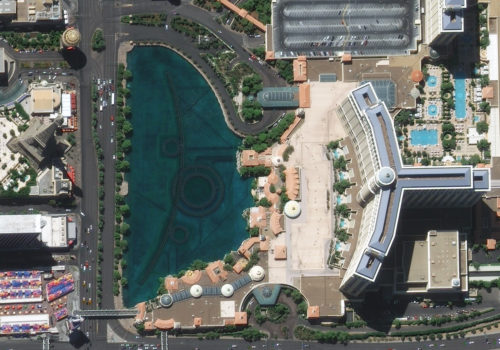
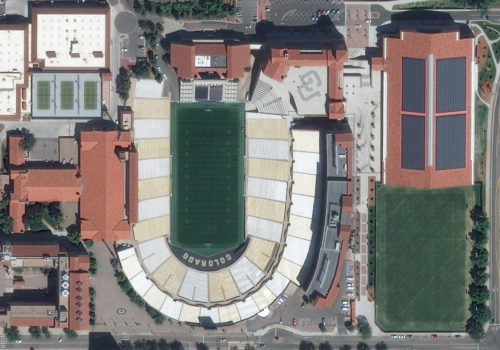
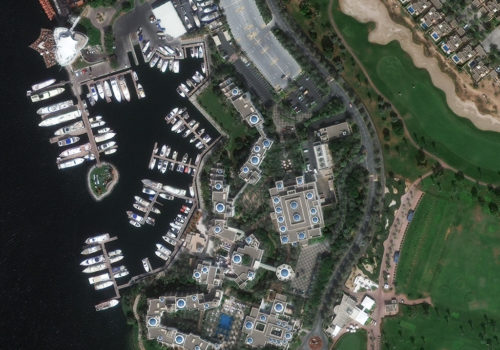
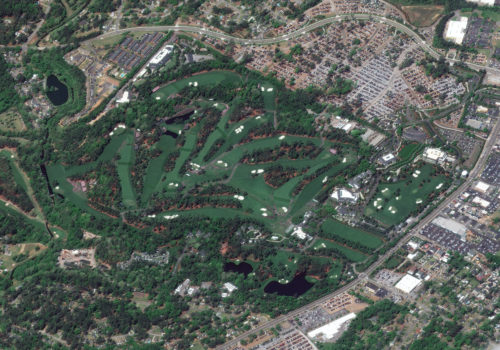
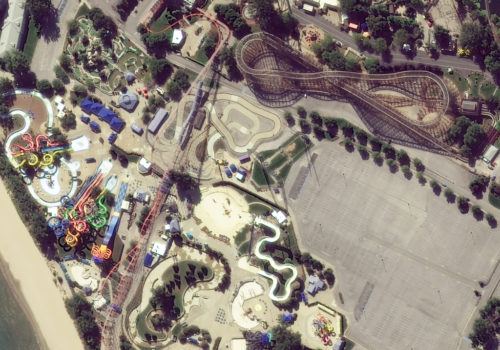
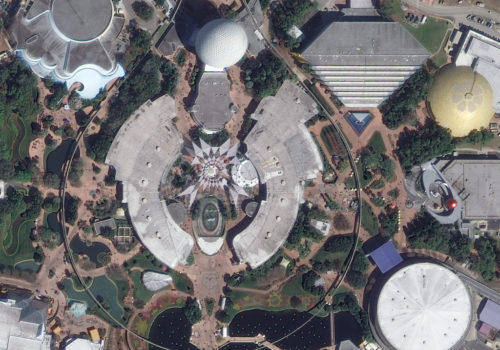
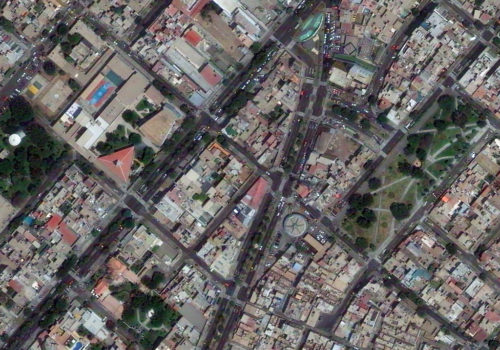
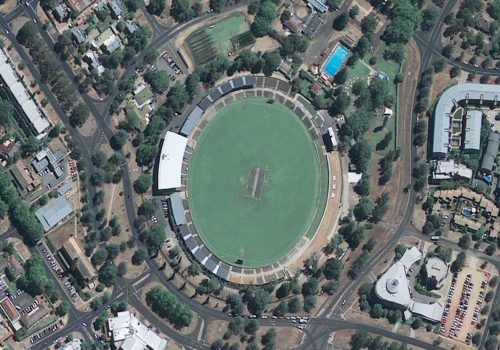
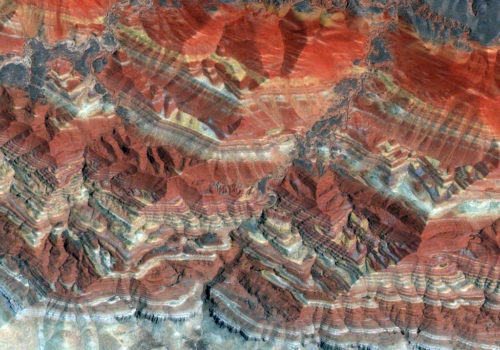
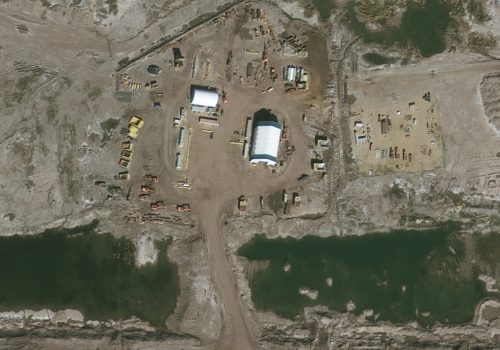
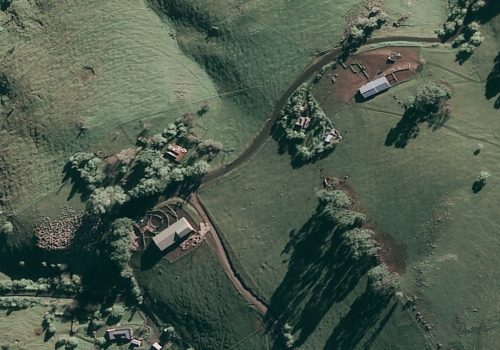
View Examples of GeoEye-1 Satellite Imagery
Click on the expand button for a larger view of each image. You can also right-click and save any of the examples to your computer for a full resolution view.
On September 6, 2008 GeoEye launched the first of their second-generation high-resolution satellites, GeoEye-1. This satellite collects 41-centimeter (cm) panchromatic and 1.65-meter (m) 4-band multispectral (i.e. blue, green, red and near-infrared/NIR) imagery. US regulations require that this data is resampled to 50-cm panchromatic and 2-m multispectral resolution for commercial clients.
GeoEye-1 circles 681 kilometers (km) above our planet, reducing the satellite’s revisit time to less than 3 days. You can’t match this satellite’s clarity!
- Launch Date: September 6, 2008, 3:50:57 PM PDT
- Vehicle: Delta II
- Site: Vandenberg Air Force Base, California, USA
- Expected Mission Life: 2015 – 2023 (7+ year design life; 15 years of fuel)
- Total Instrument Mass: 452 kg
- Satellite Dimensions: 4.35 m x 2.7 m (solar array stowed); 1955 kg
- Solar Array: 3862 W, 7 panels, 160 Ah battery
- Control Systems:
- 3-axis stabilized
- Actuators: eight high-performance reaction wheels
- Attitude measurement: two star trackers, sun sensor, scalable inertial reference unit, GPS
- Onboard Storage Capacity: 1 Terabit
- Ground Communication Systems:
- Imagery downlink – 740 megabytes per second, X-band
- Tasking & commands uplink – S-band
- Focal Plane:
- Panchromatic detector array – 37,544 pixels, 8 µm per pixel
- Multispectral detector array – 9,386 pixels, 32 µm per pixel
- Optical Sensor Assembly: 13.3-m focal length, 1.1-m aperture
- Altitude: 681 km
- Period: 98 minutes
- Orbit Velocity: ~7.5 km per second
- Inclination: 98°
- Direction: sun-synchronous circular, north to south (across the lit side of Earth)
- Equatorial Crossing Time: 10:30 AM local time (approximate; across lit side of Earth)
- Observation Time: 14 minutes (time on lit side of Earth)
- Revisit Frequency: (at 40° lat)
- 2.1 days (35° off-nadir)
- 2.8 days (28° off-nadir)
- 8.3 days (10° off-nadir)
- Spectral Bands:
- Panchromatic
- 4-band multispectral (blue, green, red and NIR)
- Sensor Resolution:
- At nadir – 41-cm panchromatic & 1.65-m multispectral
- 28° off-nadir – 50-cm panchromatic & 2.0-m multispectral
- 35° off-nadir – 58-cm panchromatic & 2.32-m multispectral
- Data delivered at 50-cm panchromatic & 2-m multispectral per US government regulation
- Spectral Band Wavelength Range: (in nm)
- Panchromatic – 450 to 800
- Blue – 450 to 510
- Green – 510 to 580
- Red – 655 to 690
- NIR – 780 to 920
- Dynamic Range: 11-bits
- Footprint Width: 15.2 km (at nadir)
- Retargeting Ability: 20 sec (time to slew 200 km)
- Daily Collection Capacity: 350,000 sq km, 700,000 sq km (panchromatic only)
- Georeferenced Horizontal Accuracy: < 4-m CE90 (global average, dependent on terrain)
Below is the least expensive GeoEye-1 data offered. Prices increase for new collections and data processing. Note that academic and volume discounts are available.
- Data Source: archive (greater than 30 days old)
- Minimum Order Size: 25 sq km (per area & date)
- Product Type: georeferenced + natural color
- Price Per Sq Km: $12.50
For an exact quote, please contact our Sales Team at sales@apollomapping.com.